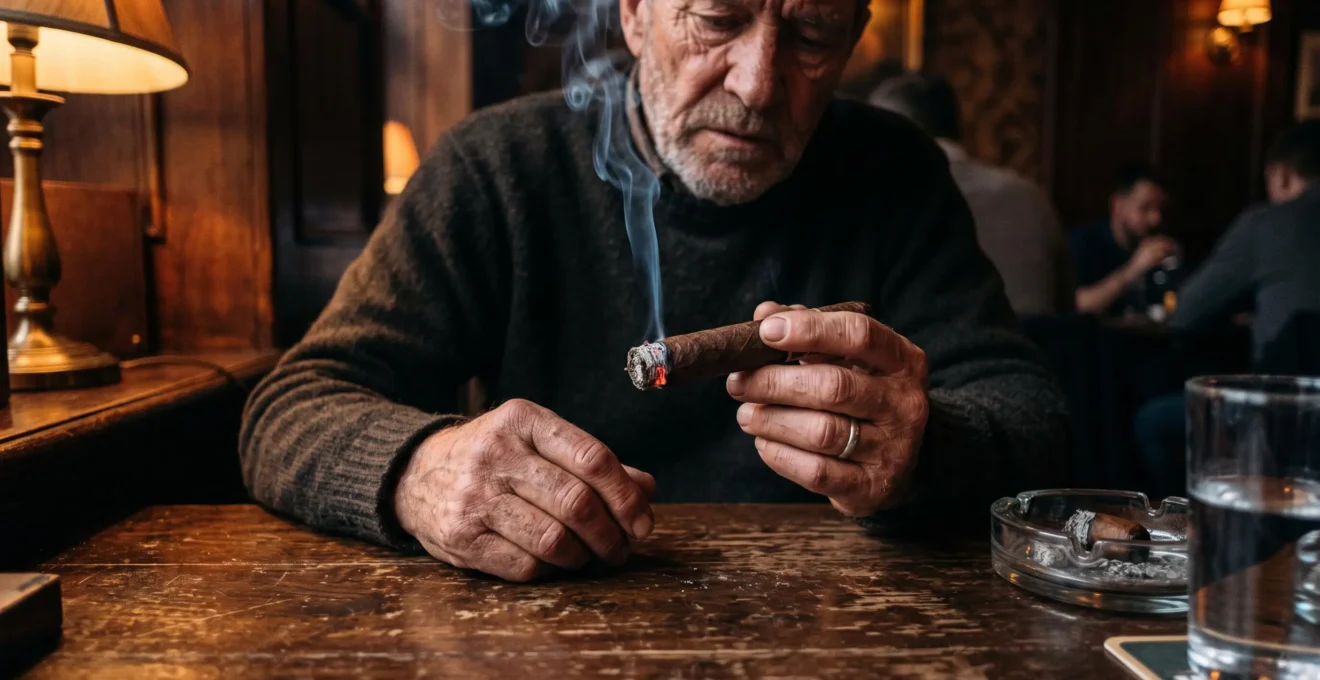
Caramel sweetness can be one of the most elusive characteristics of a premium cigar. The first few draws reveal cedar, earth or toasted tobacco. Then a rounded, buttery, brown-sugar impression appears, only to disappear roughly ten minutes later. The question is whether the cigar has changed, the palate has become less sensitive, or the smoking conditions have shifted.
All three are possible. Burning tobacco generates aromatic compounds that differ from those released by an unlit leaf, while changes in combustion, drink choice and sensory adaptation affect which flavours remain noticeable. However, there is no scientifically established ten-minute caramel window that applies to handmade cigars.
For UK cigar enthusiasts, the practical approach is to separate the blend’s underlying flavour profile from variables that can mask it. A consistent tasting record, rather than a single memorable draw, offers a better basis for choosing cigars with repeatable caramel-like character. The aim is to identify what is genuinely present, what changes during the session, and where the evidence stops.
Caramel sweetness in cigars: the essential distinctions
- Delayed sweetness: combustion creates aromas absent from the cold draw, but a settled burn line does not guarantee caramel will appear.
- Short-lived sweetness: increasing heat, flavour competition, palate adaptation and drink pairings can change the perception of toasted sugar.
- Reliable selection: compare repeated mid-smoke observations, construction, conditioning and the complete blend rather than wrapper colour alone.
- Why Does Caramel Sweetness Appear Only After the Burn Line Settles ?
- How to Make Caramel Notes Last Longer by Changing Your Cadence for 15 Minutes ?
- Colorado or Claro: Which Shade Is More Likely to Deliver Caramel Sweetness in a 45-Minute Smoke ?
- The Pairing Mistake That Erases Caramel Sweetness After 2 Sips
- When Should You Rest a Caramel-Leaning Box for 21 Days to Get More Consistency ?
- Why Does Sweetness Show Up Mid-Smoke Instead of on the Cold Draw ?
- Why Does Cedar Shift From Sweet to Dry as the Cigar Heats Up ?
- Why Do Sweet Cedar Notes Show Up Mid-Smoke and Then Turn Dry at the End ?
Why Does Caramel Sweetness Appear Only After the Burn Line Settles ?
Caramel-like sweetness may become noticeable after a cigar’s initial combustion settles because heating tobacco produces aromatic compounds that are largely absent before lighting. An even burn can also make flavour perception easier to assess. However, neither chemistry nor cigar research establishes that a stable burn line automatically causes caramel to appear.
Unlit tobacco contains naturally occurring carbohydrates and numerous aromatic precursors. As combustion begins, thermal decomposition generates additional compounds, including some associated with roasted, woody and caramel-like aromas. The scientific review of sugars in tobacco products discusses pyrolysis, caramelisation and Maillard-related chemistry, while distinguishing these processes from measurable sensory outcomes in an individual cigar.
These reactions do not mean that a cigar contains liquid caramel or that intact sugar reaches the palate. What enthusiasts describe as caramel is generally an aromatic impression resembling toasted sugar, sometimes accompanied by buttery, creamy or nutty associations. Tobacco composition, processing and combustion products all contribute to that impression.
The first centimetres can be difficult to interpret because lighting technique, uneven initial combustion and particularly strong early flavours may dominate attention. Once combustion becomes more uniform, subtler impressions may become easier to identify. That is a plausible sensory explanation, not proof of a specific temperature at which caramel suddenly emerges.
It is also worth distinguishing genuine tobacco-derived aroma from externally introduced sweetness. A sweetened cap can provide a directly sugary sensation on the lips or tongue before the cigar has warmed. Caramel-like smoke aroma, by contrast, is recognised principally through the combined experience of taste and smell.
A simple observational distinction is useful: record whether sweetness is apparent on the unlit cap, whether it persists independently of contact with the cap, and whether it resembles toasted sugar rather than plain sugar. This cannot establish the chemical origin of the note, but it reduces confusion between added sweetness and the cigar’s aromatic profile.
The first third provides a useful diagnostic opportunity. If caramel never develops, expectations should remain modest, although a later appearance remains possible. Very small ring gauges and quickly burning formats may also provide a shorter period of relatively stable sensory conditions.
A settled burn is therefore a condition worth observing, not a reliable caramel trigger. The next question is whether changes in drawing frequency explain why an initially pleasant note becomes harder to detect.
How to Make Caramel Notes Last Longer by Changing Your Cadence for 15 Minutes ?
A 15–minute cadence comparison can help determine whether repeated drawing is influencing your perception of caramel sweetness. Frequent draws may intensify heat and stronger combustion flavours, while excessive pauses can interrupt the burn. The objective is not to manufacture sweetness but to observe whether a different rhythm changes an existing aromatic impression.
Every draw supplies air to the burning tobacco. Closely spaced draws can increase combustion intensity and alter the balance of smoke constituents reaching the mouth. In tasting terms, sharper, hotter or more bitter impressions may compete with relatively delicate toasted-sugar notes.
However, it would be misleading to claim that slower puffing necessarily preserves specific caramel compounds. No controlled evidence in the supplied research establishes an ideal draw interval or proves that a particular cadence extends caramel perception by a measurable number of minutes.
There is also a practical lower limit to drawing frequency. A cigar that rests too long can lose combustion, particularly when moisture or construction contributes to poor airflow. Relighting can temporarily introduce charred, bitter and acrid impressions. Tobacconist University’s cigar relighting advice explains why remaining char influences flavour and why the effect may subside after an even relight.
A useful 15-minute observation period can be organised into three five-minute segments. Begin by recording the natural rhythm and perceived flavours. During the second segment, modestly increase the pause between draws without allowing the cigar to extinguish. In the final segment, assess whether the aromatic balance remains stable or changes again.
This is a personal comparison protocol, not a scientifically validated smoking method. Bitter flavour alone cannot reveal whether the cigar is burning too hot, too slowly or unevenly; construction, moisture and sensory adaptation can produce overlapping signs.
Five actions for a repeatable caramel tasting record
- Record the cigar: note its blend, wrapper classification, vitola and storage conditions. Deliverable: one identifiable cigar entry.
- Describe the starting profile: distinguish caramel, cream, cedar and bitterness without relying on an overall sweetness score. Deliverable: a short baseline description.
- Record the natural rhythm: observe draw spacing during the first five minutes. Deliverable: a baseline cadence note.
- Compare a modestly slower rhythm: record sensory changes and whether combustion remains even during the next ten minutes. Deliverable: a timed flavour comparison.
- Repeat under comparable conditions: assess another cigar from the same box rather than treating one session as definitive. Deliverable: a second observation identifying similarities and differences.
When comparing sessions, record interruptions and relights separately. Otherwise, a temporary bitter phase after relighting may be mistaken for evidence that the blend has permanently lost its caramel character.
If the same short-lived caramel effect recurs despite stable conditions, the next useful comparison is the tobacco blend itself, starting with the easily visible but often misunderstood wrapper colour.
Colorado or Claro: Which Shade Is More Likely to Deliver Caramel Sweetness in a 45-Minute Smoke ?
Colorado may be a reasonable starting point when looking for richer, toasted aromatic impressions, while Claro is often discussed in connection with lighter, creamy or woody profiles. Neither shade guarantees caramel sweetness, however. For a 45-minute session, evidence about the specific cigar’s blend and actual tasting progression is more useful than wrapper colour alone.
Claro describes a very light tan or golden-brown wrapper, whereas Colorado refers to medium-brown tobacco. These classifications describe appearance rather than a standardised flavour outcome.
According to Tobacconist University’s cigar wrapper color guide, tobacco variety, growing conditions, leaf position, curing, fermentation and ageing all influence appearance. The guide explicitly cautions against treating darker colour as a straightforward indicator of either greater strength or particular flavours.
A Colorado wrapper may suggest a different processing history from a Claro, but colour cannot isolate the contribution of fermentation. The filler and binder can also influence perceived sweetness, intensity and balance.
The following comparison describes useful tasting hypotheses rather than experimentally established probabilities.
| Decision factor | Claro | Colorado |
|---|---|---|
| Appearance | Very light tan to golden brown | Medium brown |
| Potential tasting associations | Cedar, hay, cream and delicate sweetness | Toasted tobacco, richer wood, coffee-like or caramel-like impressions |
| Caramel reliability | Not predictable from shade | Not predictable from shade |
| Potential complication | Subtle sweetness may be masked by stronger filler flavours | Roasted intensity or bitterness may overshadow sweetness |
| 45-minute selection | Use documented tasting progression and format | Use documented tasting progression and format |
A darker Colorado Maduro may appear particularly promising to someone seeking toasted sugar. Yet richer roasting associations can coexist with bitterness or dry wood. Conversely, a balanced Claro blend might produce a more obvious sweet impression despite its paler wrapper.
The 45-minute constraint introduces another issue: physical format. Ring gauge, length, construction and individual cadence all affect how quickly a cigar progresses. No supplied evidence shows that wrapper contribution necessarily dominates earlier in a 45-minute smoke or that Colorado becomes a better predictor in shorter formats.
When comparing two potential purchases, give greater weight to reviewers who describe the actual smoking progression. A report of repeated caramel notes during the middle portion is more relevant than a product description based only on wrapper shade.
Even a cigar with a convincing sweet profile can appear to change abruptly when accompanied by a drink. This makes pairing conditions an important source of tasting uncertainty.
The Pairing Mistake That Erases Caramel Sweetness After 2 Sips
A strongly flavoured drink can make a cigar’s subtle caramel-like aroma harder to recognise because its own bitterness, alcohol sensation, acidity or aromatic intensity competes for attention. The effect may become more obvious after several sips, but there is no established rule that two sips erase caramel sweetness or that the same pairing affects every smoker equally.
Consider a cigar whose toasted-sugar impression is subtle rather than dominant. Strong espresso introduces pronounced roasted and bitter sensations. Peaty whisky contributes powerful smoky aromas and alcohol warmth. Tannic red wine can introduce drying sensations that change the way subsequent smoke is interpreted.
These effects are better described as sensory competition and possible adaptation than as a drink chemically removing sweetness from the cigar. The original tobacco blend has not necessarily changed. What changes may be the relative prominence of flavours within the overall tasting experience.
It is therefore worth distinguishing natural progression from pairing interference. If the caramel note becomes harder to identify immediately after a drink but remains apparent during an otherwise comparable unpaired session, the pairing is a plausible contributor.
Plain water offers a relatively neutral reference because it introduces fewer competing aromas than coffee, spirits or wine. A mildly flavoured, low-tannin drink may also be easier to interpret than an intensely bitter or smoky accompaniment.
A lightly sweet drink is not necessarily better. It might make caramel associations more noticeable for some people, but sweetness in a drink can also reduce the apparent sweetness of the next flavour through contrast or adaptation. The direction depends on the drinks, timing and individual perception.
For a useful comparison, record the cigar’s flavour before the first sip, after subsequent sips and again after drinking water. Avoid interpreting a single change as a universal sensory mechanism.
If an accompaniment seems to flatten the tasting experience, water and a pause provide an opportunity to reassess. A later return of caramel is possible, but neither guaranteed nor proof that the pairing alone caused the earlier change.
Once drink interference has been separated from the blend, differences between cigars from the same box raise another question: whether storage and conditioning are influencing consistency.
When Should You Rest a Caramel-Leaning Box for 21 Days to Get More Consistency ?
A 21–day resting period can be used as a personal checkpoint after a box experiences shipping or storage changes, but it is not a scientifically established requirement for stronger caramel sweetness. What matters is whether moisture has equilibrated through the tobacco and whether the cigars show consistent construction and combustion characteristics.
Premium cigar tobacco is hygroscopic: it exchanges moisture with its surroundings. The wrapper may adjust before the deeper binder and filler, leaving a cigar that appears conditioned externally while its internal moisture distribution is still changing.
Tobacconist University’s cigar preservation guidance explains this gradual equilibration and the potential problems caused by rapid humidity changes. Excess moisture can impair combustion, mute flavours and increase relighting difficulties.
This provides a sound reason to allow cigars to adjust after substantial environmental changes. It does not establish that transportation necessarily disturbs aromatic oils, that those oils must settle for three weeks, or that caramel sweetness improves after a fixed resting period.
For a box arriving in apparently stable condition, the need for additional rest may be limited. A box exposed to changing temperature or humidity may require more time. The relevant evidence is the tobacco’s condition, not simply the number of days elapsed.
A controlled personal comparison could use three cigars from the same box, assessed on arrival, after approximately two weeks and after roughly one month. Record draw resistance, burn behaviour, harshness, sweetness descriptors and relights.
Because handmade cigars can vary from stick to stick, one cigar at each checkpoint cannot prove that resting caused a flavour change. The comparison is more informative when repeated with similar storage conditions and no major differences in accompanying drinks.
Hypothetical example: evaluating a box after delivery
Suppose a box arrives after exposure to fluctuating conditions. The first cigar burns unevenly and offers occasional caramel-like aromas alongside harshness. A second cigar assessed after a period of stable storage burns more consistently, while a third produces a broadly similar profile.
This hypothetical progression would justify investigating moisture and combustion consistency. It would not establish that resting creates caramel compounds, nor that 21 days represents an optimal maturation point.
Longer-term ageing deserves the same caution. Aromatic profiles can change with storage, but the supplied evidence does not show that caramel notes inevitably fade as oils disappear. Indefinite ageing should not be assumed to improve an individual blend.
Conditioning helps make comparisons more meaningful, but it cannot turn an unlit flavour impression into an accurate forecast of what happens during combustion.
Why Does Sweetness Show Up Mid-Smoke Instead of on the Cold Draw ?
Sweetness can become apparent during smoking even when the cold draw tastes neutral because combustion generates aromatic compounds that unlit tobacco does not produce in comparable amounts. The cold draw reflects the unburned material, while smoking introduces thermal reactions and changing sensory conditions. Neither stage reliably predicts a precise caramel peak.
A cold draw can reveal hay, dry wood, earth, mild sweetness or other impressions. These observations are real sensory experiences, but they are not equivalent to the aromas generated after lighting.
Heating tobacco produces multiple volatile compounds through reactions involving naturally occurring carbohydrates and other leaf constituents. Some reaction products are associated with caramel-like, roasted or nutty aromas. Their presence in tobacco smoke does not guarantee that an individual smoker will identify those descriptors.
Meanwhile, a distinctly sugary cold draw may have several explanations, including the tobacco’s unburned aromas or externally introduced sweetness. Without knowing the product’s composition, the sensation cannot establish whether sweetening additives were used.
The cold draw is particularly useful for evaluating draw resistance and obvious construction problems. A draw that feels unusually restricted or unusually open may indicate a mechanical issue worth considering independently of flavour.
A broad three-stage tasting framework can help organise observations:
- First third: initial combustion, emerging woody or vegetal impressions, and a developing sense of balance.
- Middle third: potentially clearer roasted, creamy, nutty or caramel-like notes as the blend’s character evolves.
- Final third: sometimes stronger, drier or more bitter impressions, although the progression differs substantially between cigars.
This is a descriptive framework, not a universal chemical sequence. Some cigars present sweetness immediately; others retain it late; others never develop a recognisable caramel note.
For purchase research, reviews discussing the middle and final stages provide more relevant evidence about sustained flavour than unlit impressions alone. Repeated observations across several cigars are more persuasive than a single cold-draw description.
It also helps to note whether the same tasting language appears consistently. One reviewer’s caramel may be another reviewer’s roasted nuts, sweet cedar or light coffee. Such differences reflect the interpretative nature of tasting vocabulary.
The distinction becomes particularly important when a sweet woody aroma appears midway through the cigar and later develops into a drier cedar character.
Why Does Cedar Shift From Sweet to Dry as the Cigar Heats Up ?
Cedar can seem sweet earlier in a cigar and drier later because the balance of perceived aromas changes as combustion progresses. Increasingly prominent roasted, woody, bitter or astringent sensations may mask an earlier sweet-cedar impression. This does not prove that cedar-derived compounds chemically transform into dryness at a particular temperature.
Cedar presents an attribution problem because the word describes several potentially different experiences. It can refer to an aroma associated with wooden packaging, to a woody characteristic of the tobacco blend, or simply to a familiar reference used by a reviewer.
A cigar stored near aromatic wood may acquire an external aromatic association. By contrast, a cedar-like impression arising during smoking may reflect compounds generated from tobacco and its processing history. The sensory description alone cannot distinguish these origins.
It is also important not to interpret every dry sensation as evidence of wood tannins. Astringency, bitterness, heat and reduced perceived sweetness can overlap, and the supplied sources do not establish a specific wood-tannin mechanism responsible for a cigar’s late-stage flavour change.
As combustion advances, the smoking experience may become more concentrated or intense. Changes in smoke delivery, local heating and sensory adaptation can all affect the relationship between sweet and dry impressions.
That means caramel need not literally disappear for the cigar to taste less sweet. A more prominent dry-wood note can make the earlier toasted-sugar character difficult to identify. This is the difference between chemical disappearance and perceptual masking.
A tasting record can separate these impressions by describing them independently: caramel intensity, cedar aroma, bitterness, dryness and overall strength. A simple overall score for sweetness would obscure which component actually changed.
Cadence and relighting can be noted alongside those observations, but slowing the draws cannot be guaranteed to delay the cedar transition. Nor should a flavour described as dry be taken as reliable evidence of cigar temperature.
The final stage brings these observations together: the most useful decision is not how to force sweetness to remain, but how to recognise whether its changing prominence reflects the cigar, the conditions or individual perception.
What to remember before the final third
- Follow the flavour balance: record caramel and dry cedar separately rather than treating them as opposite ends of one scale.
- Look for recurrence: a repeated mid-smoke pattern across comparable cigars is more informative than an isolated sweet draw.
- Recognise the limits: wrapper colour, fixed resting periods and draw intervals cannot guarantee sweetness throughout a session.
Why Do Sweet Cedar Notes Show Up Mid-Smoke and Then Turn Dry at the End ?
Sweet cedar may become noticeable during the middle portion of a cigar and give way to a drier impression near the end because combustion conditions and the balance of competing flavours evolve. Stronger roasted, bitter or woody sensations can overshadow delicate sweetness. The exact pattern depends on the blend, cigar condition and individual perception.
Seen across the entire session, the progression may resemble a sequence of changing flavour priorities rather than a simple rise and fall in sugar content.
The early portion can be dominated by lighting-related impressions and the blend’s initial aromatic profile. During the middle portion, caramel-like and cedar-like aromas may coexist in a relatively balanced way. Later, stronger sensations can become more prominent, especially when combustion becomes uneven or the overall smoking experience feels harsher.
There are two distinct processes to keep in mind. The first concerns what the burning tobacco produces and delivers as combustion advances. The second concerns how the smoker perceives those compounds after sustained exposure to the same or competing aromas.
It would overstate the science to claim that rising temperature always destroys sweet compounds faster than dry ones, or that a measured increase in nicotine and tar concentration necessarily causes the same final-third flavour in every handmade cigar. Those precise relationships are not established by the supplied evidence.
Instead, a useful working interpretation is that the relative prominence of flavours changes over time. Sweetness may become less obvious even though some of the relevant aromatic constituents remain present.
Recognising this distinction changes how cigar performance should be assessed. A cigar delivering an appealing middle portion followed by a pronounced dry finish is not necessarily defective. It may simply have a progression that differs from the smoker’s preference.
There is no requirement to continue smoking once the flavours become unpleasant. Ending a session when the desired aromatic phase has passed is a reasonable personal choice, rather than a failure to finish the cigar.
For future selection, focus on the tobacco blend’s documented and repeatable sensory character. Fermented and aged filler tobacco may influence aromatic complexity, but the supplied evidence does not prove that particular filler combinations universally resist late-stage dryness or that wrapper-led sweetness must disappear sooner.
The most useful evidence comes from consistency. If comparable cigars repeatedly produce recognisable caramel in the middle portion, and that pattern survives ordinary differences in storage and tasting conditions, confidence in the blend’s characteristic profile increases.
Conversely, a cigar described as caramel-rich based on one brief impression should be treated as an uncertain choice. A stable pattern matters more than an isolated tasting highlight.
For the next tasting comparison, record when caramel first becomes recognisable, whether cedar later overtakes it and which conditions remained consistent. Use those observations to judge whether the flavour is repeatable rather than treating an exact ten-minute window as a promise. Remember that changes which make smoke taste sweeter do not make tobacco smoking safer; combustion remains a source of harmful substances.
Does caramel flavour mean that a cigar contains added sugar?
No. Caramel-like flavour can be an aromatic impression produced by compounds formed when tobacco is heated. Some tobacco products may also contain introduced sugars or sweeteners, but a caramel descriptor alone does not establish the presence or absence of additives.
Can two cigars from the same box produce different sweetness impressions?
Yes. Differences in tobacco condition, handmade construction, combustion and individual sensory perception can affect the experience. A single cigar should therefore not be treated as definitive evidence of the entire box’s flavour consistency.
Is caramel aroma evidence that a cigar is milder or safer?
No. Aromatic sweetness does not measure nicotine strength or health risk. Tobacco sugar degradation and combustion generate a complex mixture of compounds, including harmful substances. A pleasant caramel-like aroma is not evidence of reduced exposure.
Should every reviewer describe the same cigar as caramel-sweet?
No. Flavour vocabulary is subjective, and individuals may associate overlapping aromas with caramel, roasted nuts, cream, coffee or sweet wood. Agreement across independent tasting descriptions can be informative, but identical wording should not be expected.
Does a longer cigar guarantee a longer caramel phase?
No. A longer format may allow a longer overall session, but caramel perception depends on the blend, combustion behaviour and sensory conditions. The supplied evidence does not establish a direct relationship between cigar length and the duration of any particular sweet aroma.