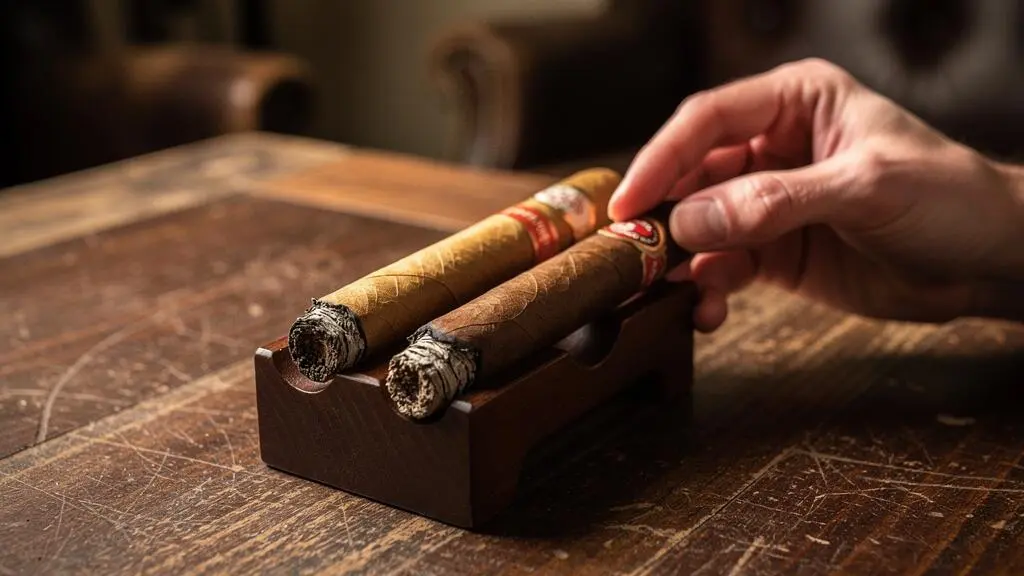
The first impressions of a cigar are not determined by the filler alone. During the opening draws, the wrapper can influence the aroma reaching the palate, the texture of the smoke and the way the burning surface develops. Its contribution depends on the leaf itself, its preparation and how it interacts with the binder and filler. This is why two cigars built around broadly similar tobacco blends can offer noticeably different introductions.
For UK cigar buyers, the practical challenge is distinguishing a wrapper’s likely sensory character from the claims suggested by its colour or name. Connecticut Shade, Cameroon, Habano, Corojo and Maduro are useful starting points, but none guarantees a particular flavour or strength. A pale wrapper is not necessarily mild, and a dark one is not automatically powerful.
The more reliable approach is to treat the wrapper as an early flavour and construction indicator, then evaluate the complete blend. Understanding leaf thickness, surface condition, cultivation and combustion makes it easier to predict what might happen during the first 20 minutes without mistaking a construction fault for a flavour characteristic.
What the Cigar Wrapper Really Controls
- The wrapper influences the cigar’s opening aroma, flavour balance and smoke texture, but its contribution varies with the binder, filler and construction.
- Leaf integrity, moisture and seam condition offer useful clues about physical reliability; colour and surface shine alone cannot establish quality.
- Choose wrappers according to preferred flavour characteristics, then check the complete blend and smoking strength rather than relying on wrapper names.
- Why Can a Thin Wrapper Deliver Brighter Flavour Yet Reveal Burn Flaws More Quickly?
- How to Compare Wrapper Oil Sheen and Veins in Under 2 Minutes Without Mistaking Appearance for Quality
- Smooth and Creamy or Peppery and Sharp: Which Wrapper Traits Should You Prioritise?
- The Bad Filler Mistake: How Wrapper Damage Can Contribute to Canoeing
- When Should You Acclimate Cigars After Travel to Reduce Wrapper Splitting?
- Why Do Shade-Grown Wrappers Often Feel Smoother Even When the Blend Isn’t Mild?
- Why Can Claro Wrappers Show Grassy Notes Early but Become Creamier Mid-Smoke?
- Why Can Shade Cultivation Produce Subtle Wrappers, and What Determines Whether They Burn Evenly?
Why Can a Thin Wrapper Deliver Brighter Flavour Yet Reveal Burn Flaws More Quickly?
A thin cigar wrapper can contribute to a delicate, clearly defined opening, but thinness alone does not create acidity, freshness or brightness. The result depends on leaf density, fermentation, moisture and the tobacco beneath it. A delicate outer leaf can also make physical imperfections more apparent because small tears, uneven moisture or damaged seams may affect how the cigar burns.
Wrapper thickness is only one part of the equation. Leaf density and preparation influence how the tobacco behaves during combustion, while fermentation changes its chemical composition and sensory character. A carefully fermented, delicate wrapper may offer a restrained introduction, whereas another thin leaf may present more pronounced vegetal, woody or spicy characteristics.
The distinction matters because perceived brightness is not the same as acidity or strength. A cigar can open with a clear, lightly aromatic flavour while still containing substantial nicotine. Similarly, a brighter opening does not necessarily mean that the cigar will remain delicate throughout the smoking experience.
The wrapper also works alongside two other structural components. The binder holds the bunch together and contributes to the cigar’s combustion characteristics. The filler contains the central tobacco blend, where different leaves contribute different aromatic and burning properties. Habanos, for example, describes how volado supports combustibility, seco contributes aroma and ligero provides fuller flavour and slower burning in its traditional construction.
This distinction helps explain why wrapper influence cannot be reduced to a universal percentage of total cigar flavour. The relationship changes with the blend, ring gauge, leaf preparation and construction. A relatively assertive wrapper may dominate the first impressions of one cigar, while a subtle wrapper may allow more of the filler character to emerge in another.
Thinness can also increase the importance of physical condition. A delicate wrapper may be more vulnerable to handling damage, especially around the seam and cap. A small split can disturb the advancing burn line, while localised overheating can make the smoke feel sharper than the tobacco’s natural flavour would suggest.
However, an uneven burn does not automatically indicate a defective wrapper. Uneven filler density, binder characteristics, moisture imbalance and lighting technique can create similar symptoms. A visible problem on the outside and a construction problem inside may therefore produce comparable results at the burning end.
To compare wrapper influence, select two cigars from the same blend family with similar dimensions but different wrapper leaves, if such a comparison is available. Record the opening aroma, flavour clarity, smoke texture and burn behaviour independently. Keep the comparison controlled, but recognise that different fermentation or construction batches can prevent a perfectly isolated test.
Scientific research on microbial changes during cigar wrapper fermentation demonstrates that processing can alter leaf colour through biochemical transformations. This is another reason not to interpret a wrapper’s appearance as a direct measurement of its flavour, acidity or nicotine content.
The useful distinction is between a brighter flavour presentation and a genuinely weak cigar. Once those concepts are separated, wrapper selection becomes a more reliable exercise in matching the opening experience to personal taste.
How to Compare Wrapper Oil Sheen and Veins in Under 2 Minutes Without Mistaking Appearance for Quality
A quick wrapper inspection can reveal physical damage, an unreliable seam or signs of poor handling, but it cannot establish the cigar’s complete quality. The most useful observations are leaf integrity, seam condition, visible cracks and unusual brittleness. Colour, vein prominence and surface shine are secondary clues, not dependable measurements of flavour or combustion.
A practical two-minute examination begins with the overall surface. Hold the unlit cigar under soft, natural light and rotate it slowly. Look for abrupt colour changes, damaged patches, exposed binder and sections where the leaf appears to lift away from the cigar.
Next, examine the surface sheen. Tobacco naturally contains oils and other compounds that contribute to its appearance, but reflected light and moisture can also make a wrapper appear unusually glossy. A highly polished appearance is therefore not proof of a richer flavour profile. A matte Connecticut Shade wrapper can be properly processed and preserved without looking especially oily.
Veins require similar care. Raised veins are natural features of tobacco leaves. Their presence does not automatically indicate poor craftsmanship, excessive toughness or inferior flavour. What matters more is whether the leaf remains intact around them. A split vein, lifted seam or torn edge presents a more relevant physical concern than a prominent but undamaged vein.
For buyers, the distinction between cosmetic variation and structural damage is especially important. A naturally uneven colour or visible vein may simply reflect the leaf’s development. A crack that exposes the underlying tobacco, however, can indicate a problem that deserves attention before purchase.
The following comparison separates the most useful observations from those that are easy to misinterpret.
| Visible characteristic | Reasonable interpretation | What it cannot establish |
|---|---|---|
| Natural surface sheen | Possible presence of leaf oils and surface moisture | Superior flavour or quality |
| Prominent veins | Natural leaf structure and texture | Poor craftsmanship or uneven burning |
| Intact overlapping seam | Positive sign of physical integrity | Correct internal bunching |
| Visible crack or lifted edge | Potential wrapper damage | The precise cause of future burn problems |
| Consistent colour | Visual uniformity across the leaf | Correct fermentation or flavour development |
The strongest purchasing evidence comes from combining several observations. An intact leaf, secure seam and absence of obvious physical damage are more useful than choosing the darkest or shiniest cigar in the display.
There are also limits to what a visual examination can establish. It cannot reveal the exact filler composition, internal bunching, nicotine concentration or the way the cigar will develop its advertised tasting notes. Those characteristics require information about the blend and, ultimately, a properly controlled tasting experience.
A wrapper inspection is most useful when it identifies something that could affect handling or combustion. Once the physical condition is established, the next decision becomes more personal: which wrapper characteristics actually suit the palate?
Smooth and Creamy or Peppery and Sharp: Which Wrapper Traits Should You Prioritise?
The best wrapper depends on the flavour experience a smoker wants from the opening draws, not on a universal ranking of tobacco varieties. Connecticut Shade is often associated with a smoother, more restrained presentation, while Cameroon, Habano and Corojo can offer more pronounced aromatic or spicy characteristics. Maduro wrappers are frequently associated with darker, richer impressions, but individual blends can differ considerably.
Wrapper names are useful buying clues, although they should never be treated as fixed tasting guarantees. Seed variety, growing conditions, curing, fermentation and ageing all influence the final leaf. The filler and binder can then reinforce, soften or completely change the wrapper’s apparent contribution.
For practical selection, it helps to separate five sensory dimensions:
- Creaminess: a rounded smoke texture and flavours that may suggest cream, milk or soft nuts.
- Sweetness: perceived sugary, honeyed or naturally rounded impressions, which do not necessarily indicate added sweeteners.
- Earthiness: soil-like, woody or mineral impressions that may become more noticeable as the cigar develops.
- Aromatic spice: fragrant complexity that can include cedar, baking spices or herbal notes.
- Pepper and sharpness: a more assertive sensation, sometimes concentrated around the tongue or palate.
These dimensions are not interchangeable. A cigar can feel creamy without tasting particularly sweet, or present aromatic spice without creating a pronounced black-pepper sensation.
Connecticut Shade is often chosen by smokers seeking a softer introduction. Cameroon may appeal to those interested in aromatic complexity and a distinctive balance of sweetness and spice. Habano and Corojo can suit palates looking for more assertive flavour possibilities. Maduro is a useful starting point for exploring darker, sometimes sweeter or earthier profiles.
However, these associations describe tendencies rather than reliable guarantees. A Connecticut Shade wrapper surrounding a robust filler blend can produce considerable body and nicotine strength. Conversely, a dark Maduro cigar may be relatively approachable despite its visual intensity.
The distinction between flavour intensity and nicotine strength is particularly important. Perceived smoothness describes the sensory experience, whereas nicotine strength relates to the physiological effect. Neither wrapper colour nor a tasting description provides a dependable nicotine measurement.
For a UK buyer comparing two cigars, the most useful questions are straightforward: what flavours should appear during the opening draws, and which sensations should remain acceptable as the cigar develops? Someone who dislikes black-pepper sharpness may prefer an aromatic, rounded introduction. Someone seeking a more assertive opening may welcome spice without automatically choosing the darkest available wrapper.
The comparison becomes more reliable when the cigar’s dimensions and blend are also considered. A larger ring gauge can change the relative presentation of wrapper, binder and filler. Differences in filler composition may also outweigh the initial wrapper impression as the cigar progresses.
Hypothetical Palate Comparison
Imagine a smoker comparing two cigars with broadly similar dimensions. The first has a Connecticut Shade wrapper and a robust filler; the second has a darker Habano wrapper and a less assertive filler. The first may feel more restrained aromatically while still delivering substantial nicotine. The second may offer a more pronounced peppery introduction without necessarily being stronger overall.
This is an illustrative comparison, not a documented product test. Its purpose is to demonstrate why wrapper colour cannot replace blend information or personal tasting observations.
A simple tasting record can help turn these tendencies into useful personal knowledge. Note the wrapper identity, cigar dimensions, opening aroma, perceived flavour intensity and changes later in the smoke. Repeating the exercise across different blends reveals whether a particular wrapper consistently suits your palate or whether the filler is driving the experience.
Once flavour preferences are established, combustion becomes the next practical test. An unexpected harsh or uneven opening may not be a characteristic of the wrapper at all; it may be the result of physical damage or an underlying construction problem.
The Bad Filler Mistake: How Wrapper Damage Can Contribute to Canoeing
Canoeing occurs when one side of a cigar burns faster than the other, leaving an uneven advancing combustion line. Uneven filler packing can cause this problem, but a damaged or moisture-imbalanced wrapper can also contribute. Airflow, binder characteristics and lighting technique provide additional possible explanations, so blaming the filler without inspecting the outside of the cigar is premature.
The wrapper is the exposed outer leaf and forms part of the cigar’s burning surface. If a section is split, lifted or unusually dry, the affected area may behave differently as the combustion line advances. The result can be an uneven burn that looks similar to a problem originating in the filler bunch.
Identifying the likely cause requires attention to the location and appearance of the problem. A crack running along the wrapper near the advancing burn edge is a reason to inspect the outer leaf. A persistent hard spot may suggest inconsistent internal packing, although touch alone cannot confirm the cause. A section that repeatedly remains unlit may indicate an uneven lighting process or differences in tobacco combustion.
Airflow is another important variable. A cigar smoked outdoors may burn unevenly when one side is exposed to stronger wind. This can produce an advancing burn line that should not automatically be attributed to wrapper quality or filler density.
Moisture can complicate the diagnosis further. A cigar with uneven moisture distribution may not burn consistently across its circumference. The wrapper, binder and filler do not necessarily respond to environmental changes at the same rate, so a surface that appears acceptable may still be part of a wider conditioning problem.
The practical mistake is to interpret every irregular burn as evidence of bad filler. Doing so can lead to unnecessary rejection of a cigar whose wrapper has been damaged through handling or storage. It can also obscure the actual cause when repeated relighting and excessive heat introduce new problems.
Excessive corrective lighting can distort flavour evaluation. A cigar that becomes harsh after repeated overheating may not be expressing its natural pepper character. Instead, the irregular combustion and increased heat may be changing the smoke’s sensory profile.
When canoeing appears, use a restrained troubleshooting approach:
- Inspect the wrapper around the advancing burn line for cracks, lifted edges or obvious damage.
- Move away from strong airflow where possible, particularly if smoking outdoors.
- Allow the burn to stabilise before deciding whether corrective action is necessary.
- If correction is required, avoid aggressive overheating or repeated unnecessary relighting.
If the uneven burn persists alongside visible structural damage, the cigar may no longer provide a reliable basis for evaluating the natural wrapper or filler flavour. Continuing to treat every harsh impression as a blend characteristic can lead to misleading tasting conclusions.
The same diagnostic approach applies when assessing a cigar after purchase. A wrapper defect and an internal bunching issue may coexist, so the most accurate explanation is not always a single cause.
Physical integrity is not just a question of appearance. It also depends on how the cigar has been transported and stored. A wrapper that was intact at purchase may become vulnerable after abrupt changes in temperature or humidity.
When Should You Acclimate Cigars After Travel to Reduce Wrapper Splitting?
Cigars should be allowed to stabilise after travel when their storage environment has changed significantly, but there is no universal acclimation deadline. The appropriate approach depends on exposure to heat or dry air, packaging quality, destination humidity and the condition of the cigar. Gradual moisture adjustment is more useful than following an arbitrary number of hours or days.
Tobacco absorbs and releases moisture from its surroundings. Because the wrapper is directly exposed, it can respond to environmental changes in ways that affect its flexibility and physical integrity. A leaf exposed to excessively dry conditions may become brittle, while excessive moisture can also affect the cigar’s structure and combustion.
Travel creates several possible scenarios. A cigar kept in a properly sealed travel case may experience relatively limited environmental change. Another transported without adequate protection in a dry cabin environment may be exposed to different conditions. A cigar transferred between locations with markedly different humidity levels may require additional time to stabilise.
These situations should not share an automatic acclimation period. The first step is to consider the conditions the cigar experienced rather than relying exclusively on the journey’s duration.
Once the cigar reaches its destination, examine the storage environment. A calibrated hygrometer provides useful information about relative humidity, while a thermometer helps establish temperature conditions. The aim is to create a stable environment appropriate for the cigars rather than force an immediate adjustment through rapid humidification.
Tobacconist University discusses traditional storage references around 70 % relative humidity, while also describing successful storage across alternative ranges, including 60–70 % relative humidity. These figures should be understood as educational reference points rather than universal requirements for every cigar or wrapper type.
The same educational resource explains that moisture stabilisation may take days, weeks or longer, depending on the cigar’s condition. It does not establish a fixed post-flight acclimation period. This supports a condition-based approach rather than a rigid travel rule.
Look for warning signs before cutting or handling a cigar that has travelled:
- Visible cracks or small splits in the outer leaf.
- A wrapper seam that appears to be lifting.
- Unusual brittleness or a leaf that seems excessively dry.
- Areas where the wrapper appears to have separated from the underlying binder.
Resting may help a cigar gradually regain a more stable moisture balance, but it cannot guarantee that an existing crack or torn leaf will return to its original structural condition. Rapid rehydration is not a dependable repair method and may introduce further moisture imbalance.
For UK buyers returning from travel, the practical decision should therefore consider the difference between the storage environment during transport and the conditions inside the home humidor. A cigar that has remained protected throughout the journey may require less adjustment than one exposed to abrupt changes.
Travel-related damage highlights an important distinction between wrapper appearance and wrapper behaviour. Cultivation also influences the leaf’s physical characteristics, particularly in shade-grown tobacco, where growing conditions can produce a different type of wrapper.
Key Takeaways Before Exploring Shade-Grown Tobacco
- A smooth-looking wrapper does not establish that the cigar contains mild tobacco or low nicotine.
- Shade cultivation can influence leaf structure and flexibility, but subsequent processing determines much of the final character.
- Combustion consistency depends on the complete cigar, including wrapper preparation, binder, filler, moisture and construction.
Why Do Shade-Grown Wrappers Often Feel Smoother Even When the Blend Isn’t Mild?
Shade-grown wrappers often feel smoother because their growing environment can produce thinner, more delicate and less prominently veined leaves. These physical characteristics may contribute to a restrained sensory introduction, but they do not determine the strength of the finished cigar. The filler can still deliver considerable body, flavour intensity and nicotine, even when the wrapper appears pale and feels delicate.
Connecticut Shade is a familiar example of this agricultural approach. Historical research published by Connecticut Agricultural Experiment Station describes how growing tobacco beneath shade tents was intended to produce thinner, smoother leaves with smaller veins.
The same historical publication identifies several environmental influences behind these characteristics. Shade structures modify sunlight exposure, but they also affect humidity, evaporation and wind velocity. Consequently, the resulting leaf characteristics should not be attributed exclusively to reduced sunlight.
Connecticut Shade: An Agricultural Perspective
The Connecticut Agricultural Experiment Station documented shade-tent cultivation in its 1934 publication, Tobacco Culture In Connecticut. The historical bulletin describes the production of thinner, smoother tobacco leaves with smaller veins and explains that changes in humidity, evaporation and wind conditions contribute to the growing environment.
This is historical agricultural evidence about leaf development, not a modern controlled sensory comparison. It does not prove that every shade-grown wrapper tastes creamier, milder or burns more evenly than sun-grown alternatives.
The distinction between leaf characteristics and finished flavour is essential. A thin, flexible wrapper may be easier to work with during cigar construction, but its sensory contribution also depends on curing, fermentation and ageing. Processing can substantially change the leaf’s appearance and flavour characteristics.
A subtle wrapper can also leave more room for the filler to become noticeable. If the central blend contains assertive tobacco, the finished cigar may develop pronounced earthiness, pepper or body despite a relatively restrained opening.
This is why wrapper identity and cigar strength should be evaluated separately. A pale Connecticut Shade wrapper does not guarantee a mild smoking experience. Equally, a darker wrapper does not automatically indicate higher nicotine intensity.
For buyers reading product descriptions, four separate details deserve attention:
- Wrapper origin: the geographical source of the outer leaf, where specified.
- Cultivation method: whether the tobacco was shade-grown or exposed to greater direct sunlight.
- Strength classification: the manufacturer’s or retailer’s description of the finished cigar’s strength.
- Tasting descriptors: the flavours and sensations associated with the complete blend.
These details answer different questions. A wrapper’s origin does not necessarily reveal where the filler was grown, and a cultivation designation cannot substitute for a complete blend specification.
The practical implication is that a smoker seeking a smooth opening should not automatically avoid shade-grown cigars containing fuller-bodied filler. Instead, the complete blend should be assessed against the desired sensory experience and nicotine tolerance.
Shade cultivation therefore explains some of the physical qualities associated with delicate wrappers, but it does not settle every question about their flavour development. One related source of confusion concerns the term Claro, which is sometimes used too loosely when describing light-coloured tobacco.
Why Can Claro Wrappers Show Grassy Notes Early but Become Creamier Mid-Smoke?
A Claro wrapper can sometimes produce delicate, grassy or hay-like impressions, but this is not a guaranteed flavour progression. The term Claro generally describes a light-tan wrapper, whereas Candela or Double Claro refers to a distinctly green leaf category. The terminology is not always used consistently across manufacturers, so the actual wrapper and complete blend matter more than the label alone.
The distinction is important because a light-tan wrapper should not automatically be expected to taste green or vegetal. Candela tobacco has a different visual and processing identity, and its flavour characteristics should not be used as a universal description of every pale wrapper.
When grassy or herbal impressions do occur, they may be most noticeable during the opening draws. These can include hay-like, cereal or fresh herbal sensations. As the cigar warms and the combustion zone advances, the balance of flavours may change.
The binder and filler can become more noticeable as the smoking experience develops. Their contribution may introduce nutty, earthy or creamy impressions that alter the initial perception of the wrapper. However, this is a possible development rather than an inevitable progression.
A useful way to examine the transition is to compare the first third with the middle third of the cigar. Rather than looking for a predetermined list of tasting notes, record the relative intensity of each sensation.
| Sensory category | First third | Middle third |
|---|---|---|
| Vegetal and grassy | Record hay-like or fresh herbal impressions | Check whether they remain prominent or become less noticeable |
| Cereal and nutty | Note any subtle grain or nut characteristics | Record whether these become more apparent |
| Creaminess | Establish the initial smoke texture | Check for a more rounded or creamy impression |
| Spice and bitterness | Record any early sharpness | Observe whether spice increases or bitterness develops |
The objective is to compare intensity rather than simply tick off expected tasting notes. If a cigar begins with grassy impressions and later becomes creamier, that progression is worth recording. If the vegetal character persists or spice becomes more prominent, the observation is equally useful.
Several variables can explain different outcomes. The wrapper may contribute to the opening impression, while the filler blend determines much of the evolving aromatic profile. Smoking speed, combustion temperature and environmental conditions can also change the experience.
A bitter middle section should not automatically be interpreted as a defect in the wrapper. Excessive heat, repeated relighting or uneven combustion may distort the flavour. Conversely, a cigar that remains grassy throughout its progression is not necessarily poorly made.
For someone building a personal wrapper preference, the most useful record includes the actual wrapper designation, cigar size, opening aroma and changes observed later. Repeating these notes across different blends makes it possible to distinguish a recurring personal preference from an isolated experience.
This also prevents marketing descriptions from becoming expectations that override the actual tasting experience. A cigar does not need to become creamy to be well constructed or worth considering again.
The final step is to combine flavour expectations with physical evidence. Shade cultivation can influence wrapper structure and sensory presentation, but an even burn still depends on the complete cigar and the conditions in which it is smoked.
Why Can Shade Cultivation Produce Subtle Wrappers, and What Determines Whether They Burn Evenly?
Shade cultivation can produce wrappers with thinner, smoother and more delicate leaf characteristics, which may support a restrained sensory presentation. However, cultivation method alone cannot predict flavour or guarantee even combustion. Burn consistency depends on the wrapper’s preparation, moisture, binder, filler distribution, construction and lighting conditions as well as the leaf’s original growing environment.
Growing tobacco under shade modifies the conditions in which the leaf develops. Reduced direct sunlight is one influence, but shade structures also change humidity, evaporation and exposure to wind. These combined conditions can affect leaf thickness, surface characteristics and vein development.
For premium cigar production, the wrapper must also possess suitable physical properties. Flexibility, an intact surface and sufficient resilience help the leaf withstand the rolling process and remain securely attached to the cigar.
These characteristics should not be confused with combustion performance. A flexible leaf may be easier to work with, but its ability to burn evenly also depends on its moisture condition, preparation and compatibility with the rest of the cigar.
The binder and filler remain central to this process. The binder secures the tobacco bunch, while the filler contains leaves with different combustion and flavour characteristics. Habanos describes these functional distinctions in its account of traditional Habano construction, including the different roles of volado, seco and ligero.
This explains why an apparently excellent wrapper can still form part of a cigar that burns unevenly. Internal bunching, inconsistent filler density or moisture imbalance may disrupt combustion even when the external leaf appears smooth and undamaged.
The opposite is also possible. A wrapper with visible veins or minor natural colour variation can belong to a well-constructed cigar that burns consistently. Cosmetic uniformity is not a reliable substitute for evidence of proper construction and tobacco preparation.
The following comparison illustrates why shade-grown and sun-grown wrappers should not be placed in a simple hierarchy of burn quality.
| Consideration | Shade-grown wrapper | Sun-grown wrapper |
|---|---|---|
| Growing environment | Modified sunlight, humidity and airflow conditions | Greater direct sunlight exposure, depending on cultivation |
| Possible leaf characteristics | Thinner, smoother leaves with smaller veins in documented Connecticut shade cultivation | Leaf structure varies with variety and growing conditions |
| Sensory expectations | May offer a restrained or delicate opening | May offer different levels of aromatic intensity |
| Physical considerations | Delicate leaves may require careful handling | Resilience depends on the actual leaf and its preparation |
| Burn performance | Depends on moisture, preparation and complete construction | Depends on moisture, preparation and complete construction |
Neither cultivation method guarantees a superior burn. A well-prepared shade-grown wrapper can perform consistently, while a delicate or poorly conditioned leaf may be vulnerable to damage. A thicker wrapper is not automatically more reliable either.
For a UK buyer, the most dependable selection method combines four observations. First, use the wrapper designation to establish a tentative opening-flavour expectation. Second, inspect the physical condition of the leaf and its seam. Third, consider the filler and binder information when available. Finally, reassess the original prediction through actual burn behaviour.
A Five-Step Cigar Wrapper Selection Checklist
- Identify the wrapper. Record its stated type and origin, such as Connecticut Shade, Cameroon, Habano, Corojo or Maduro. The deliverable is a clear wrapper identification rather than an assumption based on colour.
- Inspect the physical leaf. Check for cracks, lifted seams, damaged edges and unusual brittleness. The deliverable is a simple condition assessment: intact, questionable or visibly damaged.
- Read the complete blend description. Record available wrapper, binder and filler details alongside the advertised strength. The deliverable is a blend profile that separates wrapper identity from overall strength.
- Define the preferred opening. Choose the flavour characteristics that matter most, such as creaminess, earthiness, aromatic spice or pepper. The deliverable is a short personal flavour preference.
- Review the smoking experience. Compare opening aroma, smoke texture, burn behaviour and later flavour development. The deliverable is a tasting record that can inform the next purchase.
This combined method avoids the most common wrapper-selection mistakes. It prevents colour from being mistaken for strength, visible veins from being mistaken for poor quality and an irregular burn from being automatically blamed on the filler.
The wrapper is best understood as an early indicator rather than a complete description of the cigar. Its growing conditions and physical characteristics help establish expectations, but the binder, filler, processing and construction determine how closely the finished cigar matches them. For the next purchase, begin with the flavours preferred in the opening draws, inspect the leaf carefully and let the complete blend make the final decision.
Does a darker cigar wrapper always mean a stronger cigar?
No. A darker wrapper, including Maduro, does not automatically indicate greater nicotine strength. Wrapper colour is influenced by tobacco variety and processing, including fermentation. The cigar’s overall strength depends on the complete blend, particularly the filler. A pale Connecticut Shade cigar can contain a robust filler, while a dark cigar can deliver a comparatively approachable smoking experience.
Can you tell whether a cigar will burn evenly by looking at its wrapper?
Only partially. An intact wrapper, secure seam and absence of visible damage provide useful evidence of physical condition. However, visual inspection cannot reveal internal filler density, moisture distribution or every construction issue. Burn consistency also depends on binder characteristics, tobacco preparation, storage and lighting technique.
Is an oily cigar wrapper better than a dry-looking one?
Not necessarily. Natural leaf oils can influence surface appearance, but lighting, humidity and reflected light also affect perceived sheen. A glossy wrapper does not guarantee superior flavour or combustion. An apparently matte wrapper can still be properly processed and preserved. Physical integrity and appropriate conditioning are more useful purchasing indicators than shine alone.
How long should a cigar rest after a flight?
There is no universal post-flight resting period. A cigar transported in a sealed travel case may need less adjustment than one exposed to dry air or substantial environmental changes. Assess its physical condition and the destination’s temperature and humidity, then allow gradual stabilisation where necessary. Severely cracked or damaged wrappers cannot be guaranteed to recover through resting.
What is the difference between Claro and Candela wrappers?
Claro generally refers to a light-tan wrapper, whereas Candela or Double Claro refers to a distinctly green wrapper category. These terms are not always applied consistently by manufacturers. A grassy or vegetal flavour should therefore not be assumed from a light wrapper colour alone. Checking the actual wrapper designation and tasting notes provides a more reliable starting point.